Not my most recent album, but you might call this my Greatest Hits album, if I’d ever had any hits. It does include the four tracks released so far as singles, though, and most of the tracks are remixed and/or remastered. In fact, these are all songs that have attracted airplay in the UK and/or US, been requested at live events, or had significant numbers of plays where streamed or available in various video and audio formats. And anyway, I like ’em! Available from Apple Music, Spotify, iTunes etc.
Nothing to do with the Spice Girls or reality TV: I’ve had the basic idea for this kicking around for at least 30 years, but I finally put the words into something resembling a final version. This is a single take recording: I’ll hopefully come back to it when I’ve learned it properly, but this is Harley in country blues mode, so it’s never likely to be particularly polished… The guitar is a D’Angelico archtop, but it doesn’t sound particularly jazzy because, since it was done in one take, the acoustic sound is mixed in with the DI-d electric sound. I rather like it, but your mileage may vary.
Words and music, such as it is, by me.
Backup:
I came home last night, just about the break of day
She’s got her suitcase packed, just about to make her getaway
She said, well now baby, who do you think you are
You stayed out all night, don’t know what you came back for
Five long years my baby walked the line
Now she’s gone, long gone, since she found out I was playing double time
She said, well now baby, who do you think you are
You stayed out all night, don’t know what you came back for
Down at the courthouse, fell down on my knees
Said I love you babe, won’t you forgive me please?
She said, well now baby, who do you think you are
You stayed out all night, don’t know what you came back for
Wrote her a letter, wrote it on my knees
Babe I learned my lesson, won’t you come back please?
She wrote back,
Well now baby, who do you think you are
Got my eyes wide open, don’t know what I’d come back for
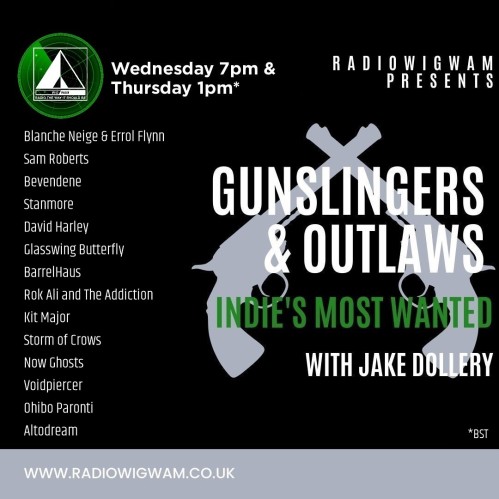
It’s always nice to get radio play (thank you again, Ian Semple, for playing ‘A Rainy Day Blues’ today on Coast FM!), but I’m particularly looking forward to being played on this one, just because of the name of the show.
I know it’s hardly five minutes since the last album, but I’ve actually been working on this one since last year.
Brookland Voices started as another vaguely folky album, but somehow Messrs Yeats (subsequently moved to the ‘Swan Songs’ album) and Housman elbowed their way in. Then I found myself with all these improvised or semi-improvised guitar pieces, some of them played on electric rather than acoustic guitar, and they do seem to dominate the album. In fact, while I would never claim to be any sort of jazz guitarist, this is probably as near to a jazz album as I’ll ever get. To be fair, ‘South Wind’ and ‘The Water is Wide’ are instrumental versions of traditional songs/tunes.
‘Severn Years In The Sand’ is a version of a song that seems to have arisen during World War II among units that saw service in the Middle East. ‘The Knocker Up’ and ‘It Ain’t Gonna Rain are actual folk songs. ‘When I Was In Love With You’, ‘Far In A Western Brookland’, ‘When I Was One-And-Twenty’ and ‘Blue Remembered Hills’ are settings of verse by Housman. The song ‘A Rainy Day Blues’ and the other instrumentals are my own, including ‘Chivalry’, which is an instrumental based on my own ‘Song of Chivalry’.
I’ve put this up before, but this is a version with electric guitar that I quite like. More jazz than blues, perhaps: I even played it on an archtop guitar.
Some days are like a melody
But I can’t seem to hold the key
I don’t mind losing
I just wish I had a little more to lose
So I spend my day trying to keep myself amused
Sitting here picking at a rainy day blues
I don’t mind losing
I just wish I had a little more to lose
It seems the road to fortune never ends
You play God all week and golf at weekends
I don’t mind losing
I just wish I had a little more to lose
And if we quit the rat-race we could have a ball
But you know those big wheels grind so small
I don’t mind losing
I just wish I had a little more to lose
You say you love me but it seems sometimes
You stuff my mouth with kisses and my ears with lies
I don’t mind losing
I just wish I had a little more to lose
Does this man have nothing better to do with his time?
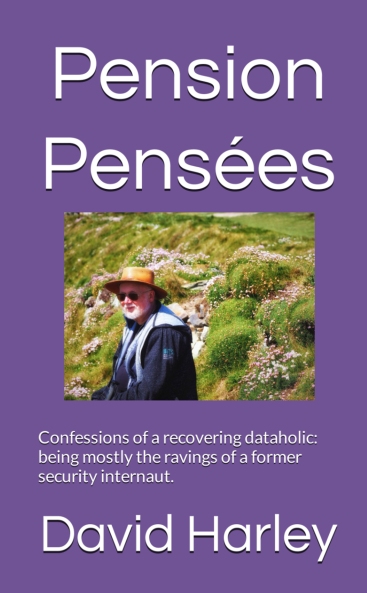
Here’s the summary:
I make no claim at all to be a cartoonist (let alone any sort of real artist). However, some people seemed to like my cheesy little cartoons (mostly IT-related), idiotic photos, and cheap sarcastic commentary, so I thought that I should start putting some of these ramblings together in the same place.
That place was the Dataholics blog, and much of this book was originally based on that content. Ironically, though, many of the cartoons have now been abstracted for other projects.
I parted company with most of the security industry in 2019 (though the recent book Facebook: Sins & Insensitivities did place me back in that arena, though not as a professional). That is, I supppose, why the Dataholics site has seen less use since then, and why what content has been posted is less like to have been related to IT security. On the other hand, much of it still has a connection to internet ephemera. Some of the content here comes from other blogs such as Parodies Regained while some hasn’t previously been made public at all.
1. Ten Percent Blues 03:42
2. The Road 03:34
3. Marking Time 01:38
4. This Guitar Just Plays The Blues 02:49
5. The Last Musketeer 02:31
6. Orpheus with his Loot 02:27
7. What Do I Do (About You) 02:05
8. Rain 03:43
9. Paper City 05:46
10. Snowbird 04:44
11. Swift Variations 02:11
12. The Wild Swans at Coole 06:17
13. Cornish Ghosts 03:49
14. Hilltop Snapshots 03:38
15. The Road to Frenchman’s Creek 02:52
16. Song of Chivalry 03:58
In early 2023 an awkward medical condition brought it home to me that perhaps it was time to draw a line under any pretensions I have to live performance, so my appearance at the Lafrowda festival in St. Just on the 15th July marked a semi-official farewell to the live stage, not that I’ve played publicly much in recent years anyway. This album is drawn from the set list for that appearance, so it takes the form (mostly) of reinterpretations of familiar (to me, anyway) material rather than new songs.
I can’t promise that I’ll never be inflicted upon a live audience again (sorry!), and I’m certainly not promising that I’ll never record or write anything else, but this is, I suppose, an end to any thoughts I had of resuming my career as a professional musician when I retired from the IT industry in 2019.
Lyrics to ‘Marking Time’ by Fiona Freeman. Lyric to ‘The Wild Swans at Coole’ by W.B. Yeats. Other lyrics and all melodies by David Harley, as are all vocals and instruments.
Having an article in the next ‘Folklife Traditions Journal‘ (out in March) and sporadically working on a(nother) folk-ish album which may have to be mostly unaccompanied, I’m starting to worry that people will start accusing me of being a folkie again. Though I picked up a guitar just now and my left hand appeared to be almost back to normal, so there may yet be quite a lot of guitar after all.
Now I’ve looked more closely, I see that Rosie Upton and I both wrote about songs sung by our grandmothers. Editor Sam Simmons gets at least two bonus points for tagging the articles The Granny Awards.
When I was a hopeful young singer-songwriter living in the South East in the 1970s, I spent a lot of time in folk clubs in Berkshire, Hampshire and Surrey. (Especially the one I helped to run for a while, at South Hill Park in Bracknell. It seems there still is a Bracknell Folk club, though it’s now at Bagshot, apparently.)
There were some fine acts who often visited the Home Counties in those days – there still are, of course, but I’m not there to see them! – some of them sadly gone (Bill Caddick, Vin Garbutt), some still around but no longer touring.
One singer whose charm and grace I remember with much affection is Miriam Backhouse (now Miriam Erasmus), a frequent visitor to the area with a wide repertoire ranging from Baron of Brackley and The Recruited Collier to Jeremy Taylor’s Nasty Spider and a spine-tingling version of Steve Goodman’s Ballad of Penny Evans. Since she moved to South Africa, we’ve seen less of her in the UK, but she still visits quite regularly, and her next tour is scheduled for June to October 2024, with another promised for 2025. I’m crossing my fingers in the hope that someone will book her for a venue near enough for me to get to, this time, as I haven’t seen her in person since those days in Bracknell!

 David Harley Words & Music & Pictures &...
You must be logged in to post a comment.